Showing posts with label Lessons. Show all posts

Tuesday, January 20, 2026

LOOK WHAT I FOUND - INCREDIBLE OLD TESTAMENT STUDY HELPS!! ENJOY!!

TWO AWEWSOME RESOURCES TO GLEAM FROM - 
THIS IS SOOOOO AWESOME!!!


RESOURCE NUMBER ONE:
1973 October Ensign       
Special Issue:  Old Testament, Exodus to Malachi
It starts off with 3 wonderful articles - but then moves onto to snippets of wonderful info!!  Find this on your gospel library app and you will enjoy learning so much!
LINK HERE  You should get the option to open in the gospel library app, if you're on your phone or tablet.
And you can always find it in the old Ensign magazine on the app, too.


RESOURCE NUMBER TWO
I found this in the Old Testament Institute Manual 
There are 6 "Enrichment Sections" throughout the manual.  I can't wait to get to them.  I have posted the first one below:


Old Testament
Enrichment Section A

Who Is the God of the Old Testament?


Who Is the Lord?

The hardhearted pharaoh, impudent and proud, asked, “Who is the Lord, that I should obey his voice … ? I know not the Lord” (Exodus 5:2). Many people today are just as ignorant of the God of the Old Testament as the pharaoh was. They regard Him as a being created by the minds of the ancients, a God of wrath and low religion who would destroy people with floods and plagues. Could this be the same God as the being of love in the New Testament revealed through the mortal ministry of Jesus Christ? Others contend that the Jehovah of Old Testament times was the same as God the Father in the New Testament. Why all this confusion? Who, really, was the God of Adam, of Enoch and Abraham, of Israel and Moses?

Jehovah, or Christ, Is the God of the Old Testament
Although for many it seems a paradox, Jehovah of the Old Testament was none other than the Son of God, Jesus Christ. He created the world under the authority and direction of God the Father. Later, Jehovah came to earth as the Savior and Redeemer of the world. This truth is one of the most misunderstood doctrines in the history of the world, despite the fact that the Old Testament and the other standard works are filled with evidence to support it.

Before looking at the scriptural evidence, it may be wise first to better understand the names and titles for God the Father and His Only Begotten Son. Generally, two Hebrew words for God are used throughout the Old Testament. These are Elohim and Jehovah, as it is presently pronounced. (Since the original Hebrew was written without vowels, scholars disagree on the original pronunciation of the name written YHWH in Hebrew. In modern revelation, however, Jesus accepted the title Jehovah [see D&C 110:3].)

Jehovah was the premortal name-title given to the Firstborn Son of God. He is now referred to as Jesus Christ. The meaning of the name Jehovah was explained by Elder Talmage:

“Jehovah is the Anglicized rendering of the Hebrew, Yahveh or Jahveh, signifying the Self-existent One, or The Eternal. This name is generally rendered in our English version of the Old Testament as LORD printed in capitals. The Hebrew, Ehyeh, signifying I Am, is related in meaning and through derivation with the term Yahveh or Jehovah.” (Jesus the Christ, p. 36.)

The Jews regarded the name of Jehovah as so sacred that it could not be spoken. Instead, they substituted for Jehovah the word Adonai, which signifies “the Lord.” (See Talmage, Jesus the Christ, p. 37.) The King James translators followed the same practice out of respect for the Jewish custom. Sometimes the word lord, however, is used to refer not to God but to royalty or other important people. To distinguish the sacred name from common usage, the translators capitalized lord when it referred to Jehovah and left it in lower case letters otherwise. (See 2 Samuel 15:21 for an example of both uses of the word lord.)

The word Elohim is a plural form of the Hebrew word for God, although modern scholars agree that it should be taken as a singular noun even though the im ending is a plural form. Joseph Smith, however, indicated the significance of the plural form:

“If we pursue the Hebrew text further, it reads, … ‘The head one of the Gods said, Let us make a man in our own image.’ I once asked a learned Jew, ‘If the Hebrew language compels us to render all words ending in heim in the plural, why not render the first Eloheim plural?’ He replied, ‘That is the rule with few exceptions; but in this case it would ruin the Bible.’ He acknowledged I was right.

“In the very beginning the Bible shows there is a plurality of Gods beyond the power of refutation. It is a great subject I am dwelling on. The word Eloheim ought to be in the plural all the way through—Gods. The heads of the Gods appointed one God for us; and when you take [that] view of the subject, it sets one free to see all the beauty, holiness and perfection of the Gods.” (Teachings, p. 372.)

Elder James E. Talmage explained the special significance Elohim has for Latter-day Saints:

“The name Elohim … is expressive of supreme or absolute exaltation and power. Elohim, as understood and used in the restored Church of Jesus Christ, is the name-title of God the Eternal Father, whose firstborn Son in the spirit is Jehovah—the Only Begotten in the flesh, Jesus Christ.” (Jesus the Christ, p. 38.)

It is vital to remember the place of God the Father: He is the Father of our spirits (see Hebrews 12:9) and is our God. The existence of other Gods cannot alter that fact. He is the author and sponsor of the eternal plan of salvation. It is equally essential to note, however, that the agent by whom He administers His affairs on this earth is His Firstborn Son, known as Jehovah in the Old Testament. He gave Jesus the full “Fatherly” authority to organize and govern the earth, then through the Atonement Jesus became the Father of the faithful. The Savior thus became the chief advocate of the Father’s plan.

Because Jesus is one with God and is also God, the Old Testament prophets sometimes referred to Him as “Jehovah Elohim,” which the King James translators rendered “LORD God.” To avoid awkward repetition, “Lord GOD” was used to translate the Hebrew phrase “Adonai Jehovah,” which otherwise would translate as “Lord LORD” (see Genesis 15:2, 8; Deuteronomy 3:24). Thus, in the King James Version of the Old Testament, the Hebrew word for Jehovah is almost always translated just this way: LORD or GOD.

One other name or title of Jesus needs explanation. He is known as Jesus the Christ. The word Christ comes from the Greek word christos, which means “the anointed one.” The Greeks used the title Christos to translate the Hebrew word meshiach, which means “the anointed one.” The Hebrew word has been anglicized into messiah. Jesus the Christ means “Jesus the Messiah.”

Jesus Christ: The God of This World
There was confusion in the minds of the later Jews, Jesus’ own people, regarding the identity of their God because they no longer understood their own scriptures. That is likewise the problem today with most of the Christian world. The mystery of understanding the identity of the God of the Old Testament arose in both cases because of wickedness and the loss of many plain and precious truths from the scriptures. By contrast, Jesus said that life eternal consisted of gaining a full knowledge of the Father and the Son (see John 17:3). In the final analysis the individual comes to know the true God through experiences that train him to be like Him, and thus he understands, or knows, Him (see 1 John 2:3; 3:1–2; Ether 2–3).

By the time Christ came, the Jews had lost the knowledge of the three distinct members of the Godhead. They had lost the truth that Jehovah, who had given them the law of Moses, would come into the world as the Redeemer of all mankind, even though the prophets had clearly taught this principle (see 1 Corinthians 10:4; 3 Nephi 15:10; Isaiah 41:14; 44:6). They yearned for the appearance of the promised Messiah as a political savior to free them from Roman rule. But Matthew testified that John the Baptist, who prepared the way for Jesus, was “he that was spoken of by the prophet Esaias, saying, … Prepare ye the way of the Lord” (Matthew 3:3). This is a reference to Isaiah 40:3, where the word LORD is used to mean Jehovah. Christ Himself told the Jews in Jerusalem that “before Abraham was, I am” (John 8:58). The people considered this blasphemy and picked up stones to kill Him, because they realized that His using the phrase I am in this way was another way of saying “I am Jehovah” (see v. 59).

All scriptures point to Christ.


Scriptural Evidence That Jesus Christ Is the God of the Old Testament
Abinadi, testifying before the court of the wicked King Noah, bore witness that all the prophets from the earliest times had testified that God (Jehovah) would “come down among the children of men, and take upon him the form of man” (Mosiah 13:34; see also v. 33). Latter-day Saints, who have the benefit of additional scripture, are taught this truth very clearly. For example, the Doctrine and Covenants shows that Jesus Christ is Jehovah and the great “I Am” (see D&C 110:3–4; 29:1).

But many in the Christian world have not carefully considered the evidence found in the Bible, which clearly teaches that Jehovah is the premortal Jesus. The following scriptures are only a sampling of the biblical evidence. (Remember that LORD means that Jehovah is the Hebrew word used.)

Statement Graph with OLD and NEW Testament - I've made screenshots - to make it easier to see - but it is best to see GRAPH ON COMPUTER OR TABLET


The Importance of Knowing the Identity of the God of the Old Testament
Many people, including numerous Bible scholars, have concluded that the God depicted in the Old Testament was the product of the superstitions and primitive beliefs of a primitive and superstitious people. They come to this conclusion because they see things that seem contradictory to their conception of the God of the New Testament. To know that the Lord of the Old Testament was the premortal Jesus Christ has tremendous implications, however, not only for a correct understanding of the Old Testament and the New Testament, but also for a correct understanding of the nature and purposes of God and of man’s relationship to each member of the Godhead.

For example, the same Person who said, “Love your enemies” (Matthew 5:44), said of the Canaanites in the land of promise, “Thou shalt save alive nothing that breatheth: but thou shalt utterly destroy them” (Deuteronomy 20:16–17). The same Savior who said to forgive “seventy times seven” (Matthew 18:22) destroyed the entire population of the earth with the exception of eight souls (see Genesis 7–8).

On the other hand, the Jesus of the New Testament who said that one who refuses to forgive another’s trespasses will be “delivered … to the tormentors, till he should pay all that was due” (Matthew 18:34–35) is the Lord of the Old Testament who said, “Though your sins be as scarlet, they shall be as white as snow; though they be red like crimson, they shall be as wool” (Isaiah 1:18). And the Christ depicted in the book of Revelation, who is shown with the great sickle ready to reap the grapes of the earth and tread them in the winepress (see Revelation 14:14, 20), is the same God of the Old Testament who said to Micah, “What doth the Lord require of thee, but to do justly, and to love mercy, and to walk humbly with thy God?” (Micah 6:8).

There is no inconsistency in the nature of God. He is always perfectly merciful and loving, but He is also perfectly just and will not “look upon sin with the least degree of allowance” (D&C 1:31). As He said to Joseph Smith, “God doth not walk in crooked paths, neither doth he turn to the right hand nor to the left, … his paths are straight, and his course is one eternal round” (D&C 3:2). In the Old Testament is the same perfectly consistent God found in all scripture. In the Old Testament great richness is added to the understanding of God and how He deals with His children, blessing them according to their obedience and receptivity, or punishing them for rebellion and wickedness. If one would get to know Christ better, one must study the Old Testament, for in His role as Jehovah He permeates the whole record. Jesus Christ is the God of the Old Testament just as He is the God of the earth today. Keeping this important fact constantly in mind is one of the keys to understanding both the Old Testament and the nature of God.


Sunday, August 10, 2025

Four Friends . . .

Once upon a time there was a girl who had four friends.

She loved the fourth friend the most and adorned him with rich robes and treated him to the finest of delicacies. She gave him nothing but the best.

She also loved the third friend very much and was always showing him off to neighboring kingdoms. However, she feared that one day he would leave her for another.

She also loved her second friend. He was her confidant and was always kind, considerate and patient with her. Whenever this girl faced a problem, she could confide in him, and he would help her get through the difficult times.

The girl's first friend was a very loyal partner and had made great contributions in maintaining her wealth and kingdom. However, she did not love the first friend, although he loved her deeply, she hardly took notice of him!

One day, the girl fell ill and she knew her time was short. She thought of her luxurious life and wondered, 'I now have four friends with me, but when I die, will I be alone?'

Thus, she asked the fourth friend, 'I loved you the most, endowed you with the finest clothing and showered great care over you. Now that I'm dying, will you follow me and keep me company?' 'No way!' replied the fourth friend, and he walked away without another word. His answer cut like a sharp knife right into her heart.

The sad girl then asked the third friend, 'I loved you all my life. Now that I'm dying, will you follow me and keep me company?' 'No!' replied the third friend. 'Life is too good! When you die, I'm going to marry someone else!' Her heart sank and turned cold.

She then asked the second friend, 'I have always turned to you for help and you've always been there for me. When I die, will you follow me and keep me company?' 'I'm sorry, I can't help you out this time... At the very most, I can only walk with you to your grave.' His answer struck her like a bolt of lightning, and the girl was devastated.

Then a voice called out: 'I'll go with you. I'll follow you no matter where you go.' The girl looked up, and there was her first friend. He was very skinny as he suffered from malnutrition and neglect. Greatly grieved, the girl said, 'I should have taken much better care of you when I had the chance!'

In truth, you have four friends in your lives:

Your fourth friend is your body. No matter how much time and effort you lavish in making it look good, it will leave you when you die.

Your third friend is your possessions, status and wealth. When you die, it will all go to others.

Your second friend is your family and friends. No matter how much they have been there for you, the furthest they can stay by you is up to the grave.

And your first friend is your spirit. Often neglected in pursuit of wealth, power and pleasures of the world. However, your spirit is the only thing that will follow you wherever you go. Cultivate, strengthen and cherish it now, for it is the only part of you that will follow you to the throne of God and continue with you throughout eternity.

Thought for the day: Remember, when the world pushes you to your knees, you're in the perfect position to pray.

Being happy doesn't mean everything's perfect. It means you've decided to see beyond the imperfections.

Monday, December 30, 2024

Come Follow Me - Christmas Lesson

 Christmas

From Nephi to Moroni, every Book of Mormon prophet was committed to the sacred purpose summarized on the book’s title page: “the convincing of [all people] that Jesus is the Christ.” One prophet saw Him as a premortal spirit, and another saw His mortal ministry in a vision. One stood on a wall to proclaim the signs of His birth and His death, and another knelt before His resurrected body, touching the wounds in His hands, feet, and side. All of them knew this essential truth: “There is no other way nor means whereby man can be saved, only through the atoning blood of Jesus Christ, who … cometh to redeem the world” (Helaman 5:9).

So during this Christmas season, as believers around the world celebrate the goodness and love of God in sending His Son, ponder how the Book of Mormon has strengthened your faith in Christ. As you think about His birth, ponder why He came and how His coming has changed your life. Then you can experience the true joy of Christmas—the gift that Jesus Christ gives to you.

Ideas for Learning at Home and at Church


Jesus Christ was born to be my Savior.

It’s traditional to read the story of the Savior’s birth in the New Testament at Christmastime, but you can also find moving prophecies of this sacred event in the Book of Mormon. For example, prophecies of the Savior’s birth and ministry are found in 1 Nephi 11:13–36Mosiah 3:5–10; and Helaman 14:1–13. What impressions about Jesus Christ come to you as you read these passages and contemplate the symbolism of the signs of His birth? How do the testimonies of these prophets strengthen your testimony of Christ and His mission?

  • Here are some other suggestions to help you focus on Jesus Christ at Christmastime:

  1. Did you know that you can watch messages from previous First Presidency Christmas devotionals in the Gospel Library? Look for them in the “Christmas Videos” collection. Consider sharing these messages and music to spread Christmas cheer.
  2. You and your family might also enjoy listening to selections from the “Christmas Music” collection in the Gospel Library.
  3. Consider planning activities that you or your family can do in the days leading up to Christmas to feel the Spirit of Christ, such as serving someone or singing Christmas hymns together.   See LighttheWorld.org for ideas.

Away in a Manger,” Hymns, no. 206.

Christmas Study Plan Gospel Library Banner


Jesus Christ is the Redeemer of the world.

The main reason we celebrate the birth of Jesus Christ is because of His atoning sacrifice. Because of that sacrifice, He can save us from sin and death, comfort us in afflictions, and help us “be perfected in Him” (Moroni 10:32). What have you learned from the Book of Mormon this year about the Savior’s power to redeem you? Do any accounts or teachings stand out to you? Consider what the following passages teach you about the Savior’s redeeming mission: 2 Nephi 2:6Alma 7:7–1311:40; and Helaman 5:914:16–17. What do you feel inspired to do to show Him your gratitude?


seminary icon
The Book of Mormon testifies of Jesus Christ.

“Another Testament of Jesus Christ” is more than just a subtitle for the Book of Mormon; it is a statement of its divine purpose. Ponder what you learn from the following scriptures about the Book of Mormon’s mission to testify of Christ: 1 Nephi 6:419:18; and 2 Nephi 25:23, 2633:4, 10.


Consider recording in a journal how studying the Book of Mormon this year has brought you closer to Christ. The following prompts might help:


“Something I learned or felt about the Savior this year was …”


  • “Learning about the Savior in the Book of Mormon changed the way that I …”


  • “My favorite person [or story] in the Book of Mormon taught me that the Savior …”


  • Maybe there’s someone who would be blessed to know how you feel about the Book of Mormon. How might you share your experiences and testimony? You might feel inspired to give a copy as a Christmas gift. The Book of Mormon app makes sharing simple.


Bishop Gérald Caussé listed several truths from the Book of Mormon about Jesus Christ (see “A Living Witness of the Living Christ,” Ensign or Liahona, May 2020, 39–40). You might look at his list and ponder how each of these truths has changed—or could change—your life.


See also Gospel Topics, “Book of Mormon,” Gospel Library.


For more ideas, see this month’s issues of the Liahona and For the Strength of Youth magazines.

Ideas for Teaching Children


Because this Sunday is the fifth Sunday of the month, Primary teachers are encouraged to use learning activities in “Appendix B: Preparing Children for a Lifetime on God’s Covenant Path.”


Jesus Christ is Heavenly Father’s gift to me.

  • To help your children focus on the gift Heavenly Father gave us by sending His Son, you could wrap a picture of Jesus Christ like a Christmas present. You and your children could talk about favorite Christmas gifts you have received or hope to receive. Then they could unwrap the picture of Christ and discuss how He has been a precious gift for us. A song like “He Sent His Son” (Children’s Songbook, 34–35) could add to this conversation. Help your children find phrases in the song that describe blessings we have because of Jesus’s birth.


Jesus Christ was born to be my Savior.

  • Your children might enjoy sharing with you what they know about Jesus’s birth. The Gospel Art Book has several pictures that could help them tell the story (see nos. 28293031). You could also look at pictures depicting the Savior’s life and atoning sacrifice. Why did Heavenly Father send Jesus Christ?
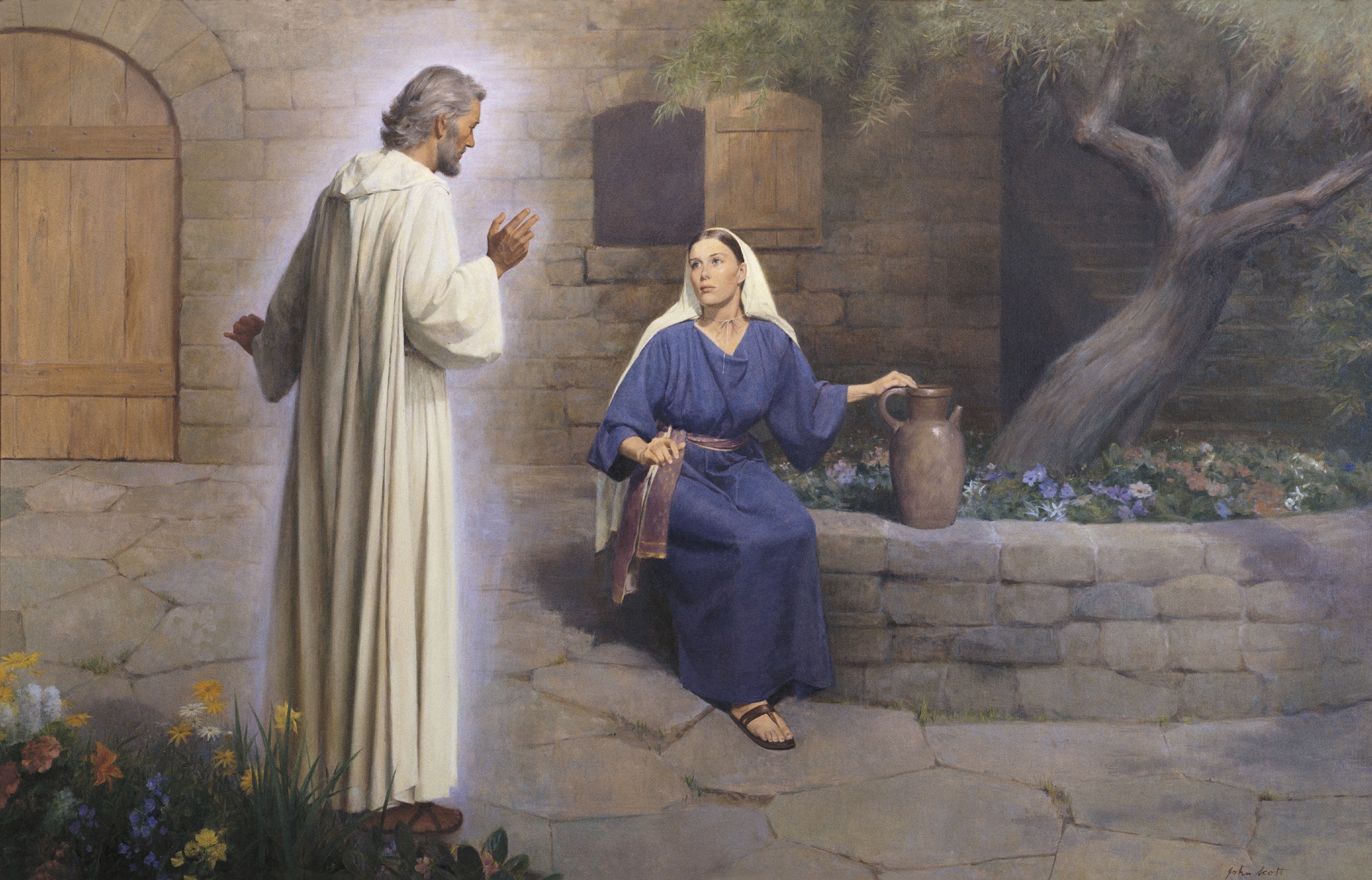
    angel


  • Your children might also enjoy drawing their own pictures of Jesus’s birth and ministry. Maybe they could draw what is described in 1 Nephi 11:13–23Mosiah 3:5–10Helaman 14:1–13; and 3 Nephi 1:4–22. Then they could share with you what their pictures teach about Jesus Christ.


  • To emphasize that the Bible and Book of Mormon both teach of Jesus’s birth, you could list the events described in Luke 2:4–14Matthew 2:1–2; and 3 Nephi 1:15, 19–21. Then your children could search these scriptures to determine which events happened in Bethlehem, the Americas, or both. Why are we thankful to have the Book of Mormon as a second witness of Jesus’s birth?


Children love stories. Stories are one of the best ways to help children learn and remember truths. As you share the story of Jesus’s birth, consider also sharing stories from your life that have helped to strengthen your faith in the Savior.The Book of Mormon testifies of Jesus Christ.


  • The Book of Mormon testifies of Jesus Christ.

  • As you and your children conclude your study of the Book of Mormon this year, it might be a good time to share with each other your favorite stories or passages from this sacred book. Looking at some of the pictures in Come, Follow Me or Book of Mormon Stories could help your children remember what they’ve been learning this year. Help them see what these stories teach us about Jesus Christ.


  • You could also give your children a picture of Jesus, or let them draw their own. Invite them to hold up their pictures each time they hear Christ’s name as you read 2 Nephi 25:23, 26. Testify that the Book of Mormon was written to help us “believe in Christ” (2 Nephi 25:23).


For more ideas, see this month’s issue of the Friend magazine.

an angel showing Nephi the Virgin Mary in a visionNephi’s Vision of the Virgin Mary, by Judith A. Mehr